Kingman’s Aviation started on an open piece of ground across from the Mountain View Cemetery. Before it became an airplane landing strip, the main use was a cattle pasture.
The former Hall Street, now Stockton Hill Road, separated the cemetery and airstrip. This airstrip was commonly known as Wallapai (Hualapai) Field. This is the starting point for aviation history of Kingman and Mohave County.
It was soon to be replaced by Port Kingman which was the first commercial airport in Arizona and TAT was the forerunner of TWA.
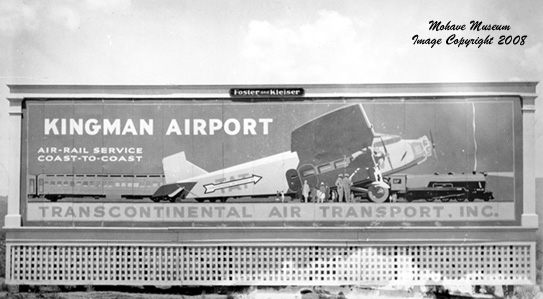
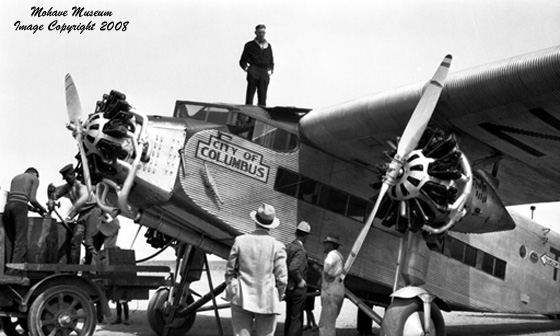
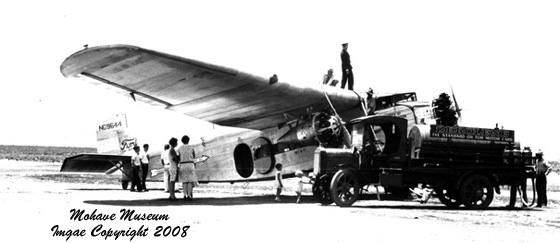
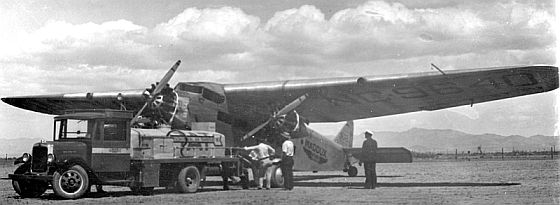
Kingman TAT Terminal - 1929 - The Transcontinental Airport Tranport, Inc (TAT) established the Kingman terminal, along with 10 others in 1929 as part of an effort to decrease the amount of travel time from one side of the United States to the other.
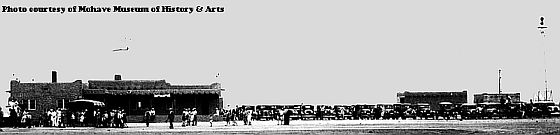
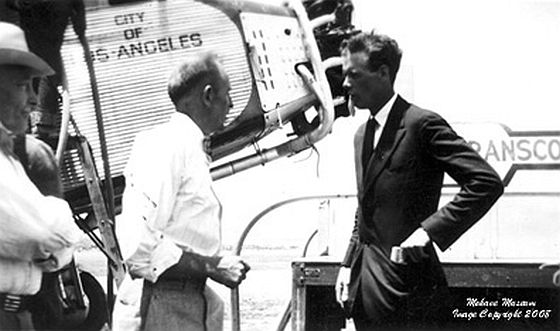
It was part of a railway and airline effort, whereby passengers would fly during the daylight by plane and travel by railway during the night by train. This effort was spearheaded by Charles Lindberg, who played a critical role in the development and establishment of the new route.
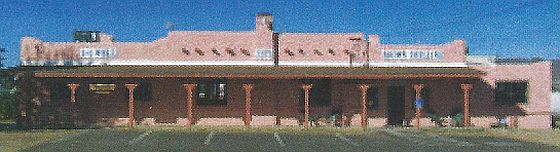
The Kingman terminal was used from 1929 until it was replaced by the current Kingman Airport in the 1940s. The main terminal building remains intact, and it one of two left standing today, with the other located in Winslow.
In the 1940s, after the air activity had transferred to the current airport, Senator Morrow had purchased the property and turned it into a residence. Through the years since, it has been home to a number of businesses and residents. It currently houses.
|

































 2011 All About Kingman LLC All rights reserved.