|
Beale Springs was used by Native Americans for centuries before Lt. Edward Beale traveled through the area in the 1850s and established a wagon road along the 35th parallel.
The area of Beale’s Springs, near Kingman, can trace its Euro-American history to 1859 when work parties of the Beale Wagon Road discovered and improved the site. Beale called it Bishop’s Springs in honor of his colleague who found the springs.
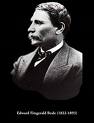 By 1863, the site was commonly know as Beale’s Springs and became a way station on the Mohave and Prescott Toll Road in 1864. During the Hualapai Indian War (1866-70), the site was a temporary camp for the military in an attempt to protect the mails. By 1863, the site was commonly know as Beale’s Springs and became a way station on the Mohave and Prescott Toll Road in 1864. During the Hualapai Indian War (1866-70), the site was a temporary camp for the military in an attempt to protect the mails.
With its generous supply of water, it was a point of critical importance on a major wagon road through the desert. The water from beale’s Springs would play an important part in the establishment of a nearby railroad siding on the new Atlantic and Pacific Railroad.
The Beale Springs site became a water source for the rapidly developing city of Kingman. A water reservoir was built there and is still partially standing today. It is said that in addition to serving its intended purpose, the reservoir sometimes doubled as a swimming pool.
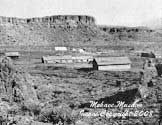 After the Beale Springs site was no longer inhabited, local people held picnics there and enjoyed the water and shade provided by fruit trees that had been planted many years before. Today, you can still enjoy a picnic there in the quiet atmosphere or do some hiking. After the Beale Springs site was no longer inhabited, local people held picnics there and enjoyed the water and shade provided by fruit trees that had been planted many years before. Today, you can still enjoy a picnic there in the quiet atmosphere or do some hiking.
|

















 2011 All About Kingman LLC All rights reserved.